Beard Care
Beard Trim in Northwood: How Often, and What to Ask For
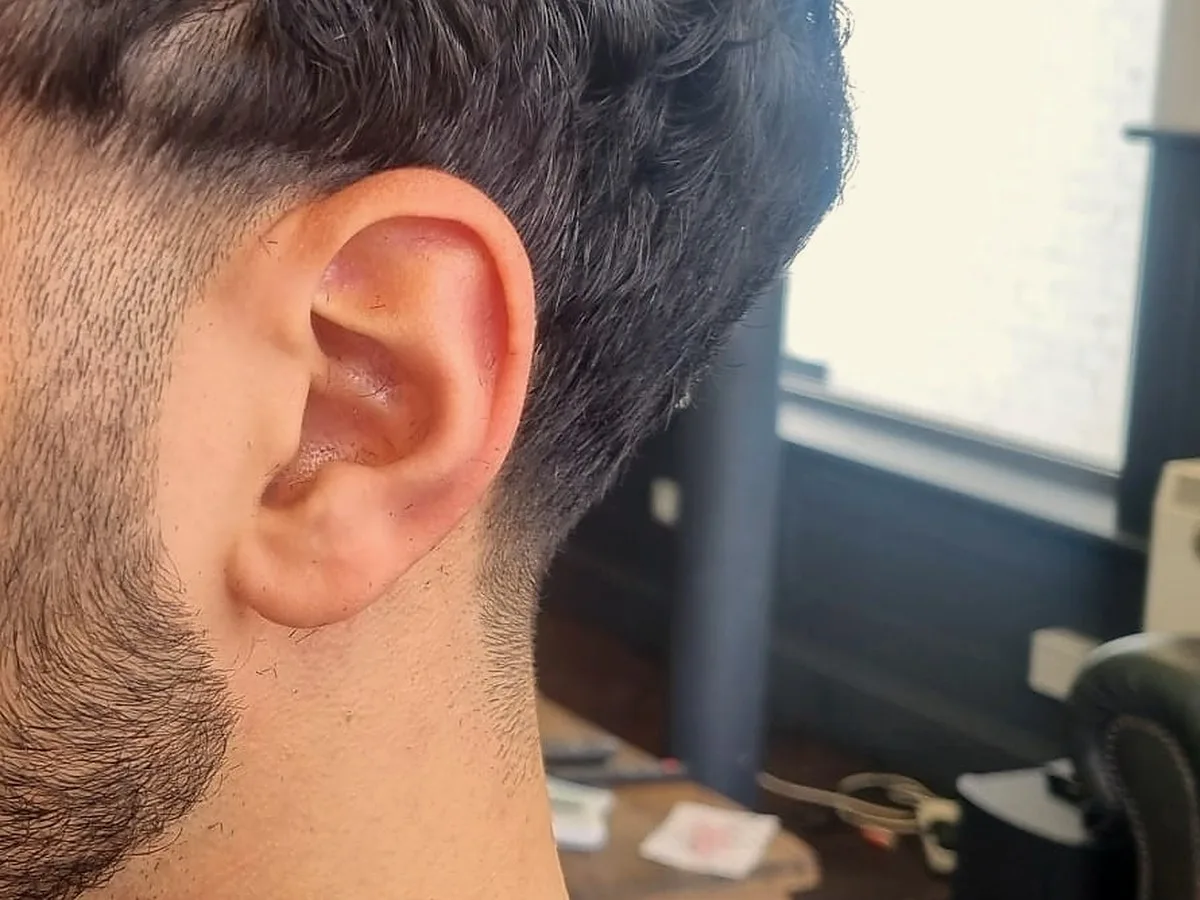
Short answer: Most beards want shaping every two to four weeks, sooner if the neckline is the part that bothers you. A beard trim at The Billion Dollar Barbers is £9 on its own, or £23 with a haircut, which is when the hairline and the jawline get shaped against each other in one sitting.
A beard goes wrong at the edges long before it goes wrong anywhere else. This is where those edges belong, how often they need attention, and what to say in the chair so you get what you meant.
How often should you get your beard trimmed?
Every two to four weeks for most men, and the variation is not about the beard.
It is about which part of it you notice first. A beard has three areas that grow at their own pace and go untidy on their own schedule. The length grows slowly enough that nobody sees it change. The cheek line blurs faster. The neck goes first, always, and it is the reason a beard that was fine on Monday looks scruffy by the following weekend even though nothing on your jaw has moved.
So the honest answer depends on which of those bothers you. If it is the shape and the length, four weeks is usually fine. If it is the neck, you are on a fortnightly cycle whether you like it or not, because that is how quickly a defined line stops being a line.
The other variable is contrast. A short, tightly shaped beard shows every stray hair, so it wants attention often. A longer, softer beard hides a great deal and can go a month without anyone noticing. Neither is better. They are different maintenance commitments, and it is worth choosing one deliberately rather than drifting into the demanding version by accident.
A beard trim at The Billion Dollar Barbers is £9 on its own, which is deliberately priced so that keeping on top of it is not a decision you have to weigh up every time.
On its own, or with the haircut?
Together, if the two are due at the same time. It is not just cheaper.
A haircut and beard trim is £23 against £20 for the cut and £9 for the beard separately, so doing both in one sitting saves six pounds and a second journey. That is the obvious part and it is the least important part.
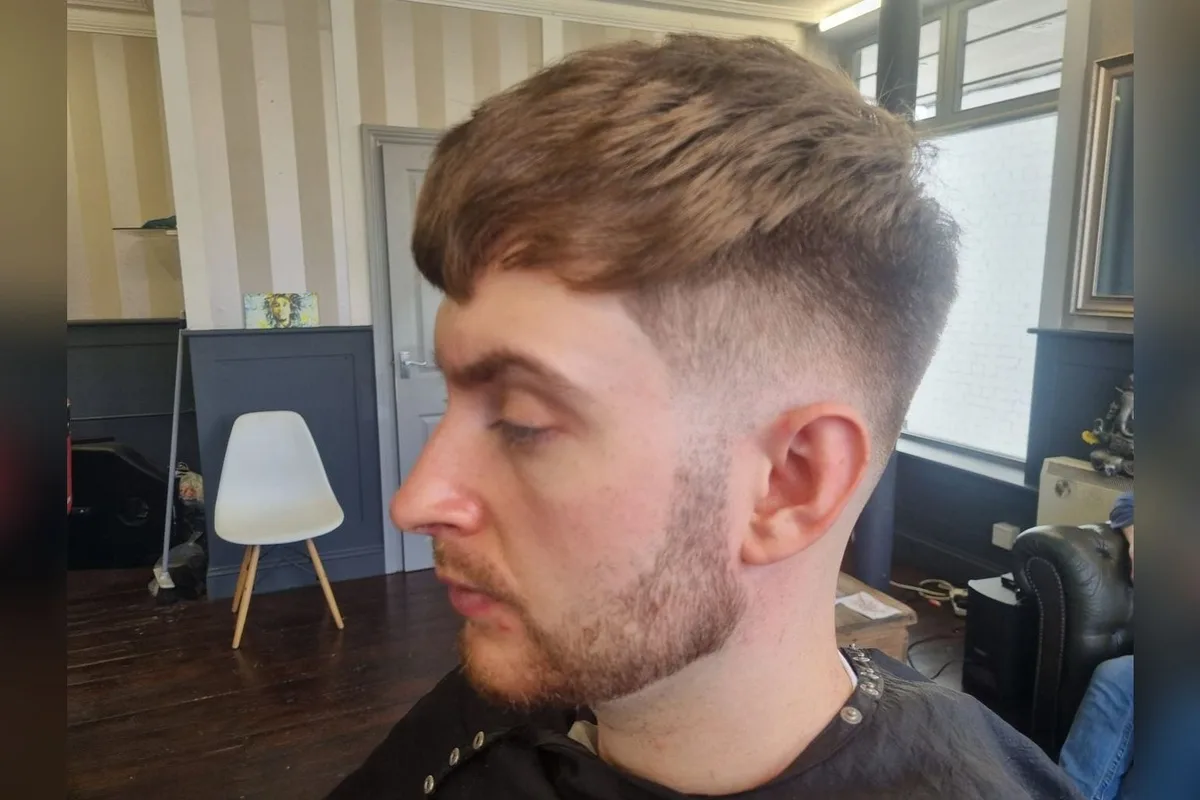
The real reason is that your hairline and your jawline are the same problem. The sideburn is where the haircut ends and the beard begins, and it is the one place on your head where two separate pieces of work have to agree with each other. Shaped in the same appointment, against the same face, in the same light, they line up. Shaped three weeks apart by whoever was free, they do not, and the result is a sharp haircut sitting above a beard line that belongs to a different plan.
That is the most common thing wrong with a beard that its owner cannot name. It is rarely the beard. It is the join.
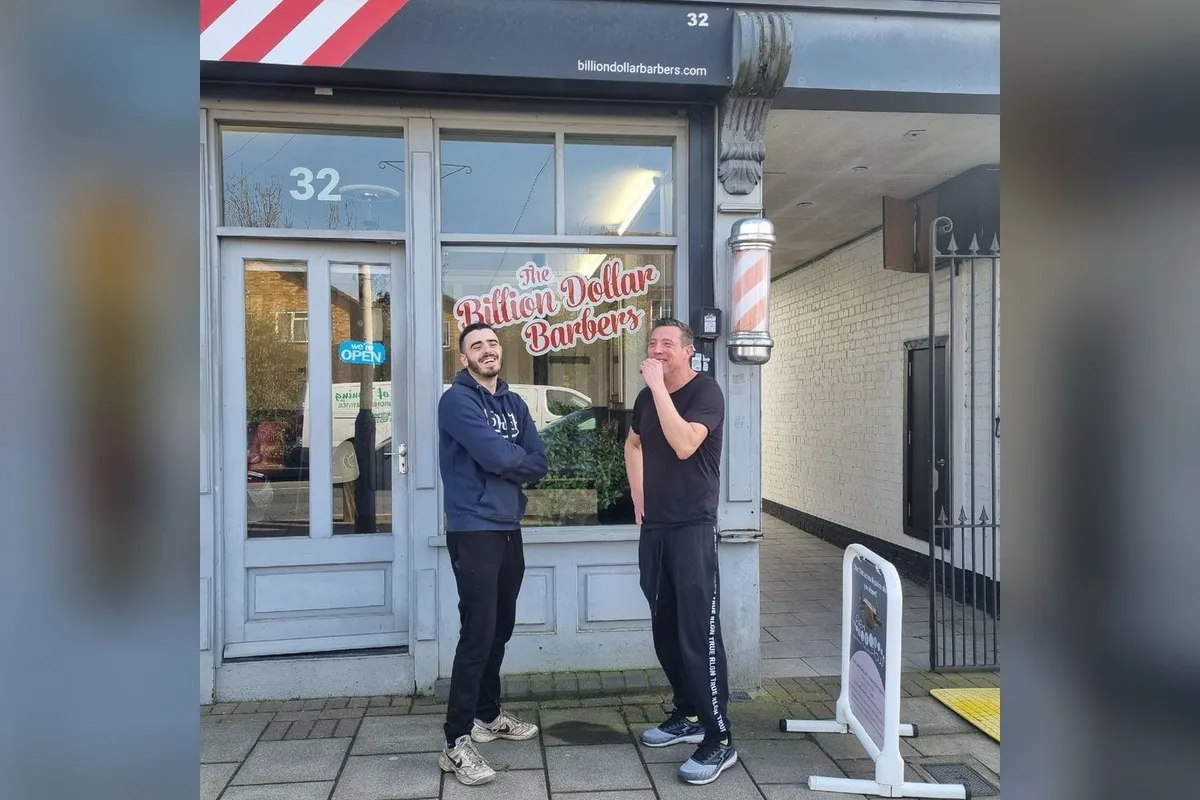
Grant owns the shop and is the only barber in it, so both halves are his work and both get judged by the same eye. If you wear a beard and get your hair cut anyway, the combined service is the sensible default and the standalone trim is for keeping it sharp in between.
Where should the cheek line sit?
Higher than most men take it, and following your own growth.
The cheek line is the top edge of the beard running from the sideburn towards the corner of the mouth. There is a fashion for taking it very low and very straight, which reads as neat in the first week and tends to make a face look narrower and the beard look drawn on rather than grown.
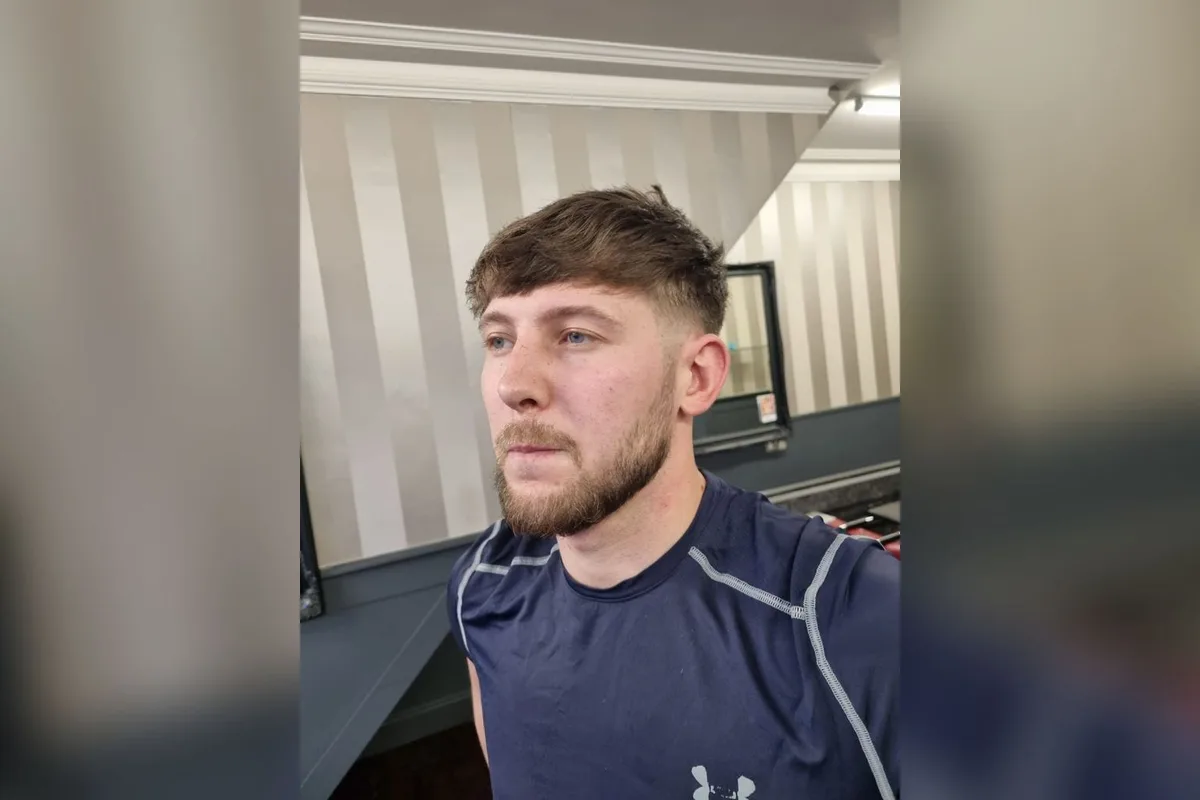
The usable guide is to leave the line roughly where your growth naturally thins out, and to tidy above it rather than carve below it. Most men have a fairly clear edge where the dense growth stops and the stray hairs begin. Taking off what sits above that edge looks deliberate. Cutting a new line well underneath it removes beard you actually wanted and commits you to maintaining an artificial edge every fortnight forever.
The other thing worth saying is that cheek lines are not symmetrical, because faces are not. A line drawn to be identical on both sides will look wrong on at least one of them. Matched to the face, it looks right and nobody can tell you why.
If you like it sharper than natural, that is a legitimate choice. Just make it knowingly, and know that it is the version that needs the most upkeep.
Where should the neckline sit?
At the point where your jaw stops and your neck begins, and no lower.
This is the single most common mistake and the easiest one to fix. The instinct is to shave the neck clean up to the jawbone, which turns the beard into a strip attached to the chin and, from the side, makes the jaw disappear rather than defining it.
The line wants to sit above the Adam's apple and follow the curve of the jaw, not the straight edge of a razor. Below that line, clean. Above it, beard. That single boundary does more for how a beard reads than the length ever will.
The reason the neck needs redoing more often than anything else is that neck hair grows in every direction at once, so the definition softens quickly and stubble appears outside a line that was crisp two weeks ago. That is not the trim failing. It is the part of the job with the shortest half-life, which is exactly why a £9 tidy between cuts exists.
What if you are growing it out?
Keep going to the barber. That is the counterintuitive part.
Men growing a beard out usually stop getting it touched, on the reasonable theory that cutting hair is the opposite of growing it. What that produces is length arriving unevenly, because beards do not grow at the same rate everywhere, and a neck that has quietly taken over while you were waiting.
The right approach while growing is to leave the length entirely alone and keep the boundaries defined. Neck kept clean, cheek line tidied, stray hairs taken back, nothing off the front. That way the beard gains length while still looking like a decision rather than a lapse, which matters a great deal through the awkward four to eight week stretch where most attempts get abandoned.
Say it explicitly in the chair: I am growing this out, do not touch the length, just tidy the edges. It is a short sentence and it prevents the exact outcome you are worried about.
What should you actually ask for?
Describe what you want it to do, not the number.
Guard numbers are useful for the haircut and close to meaningless for a beard, because the same grade sits completely differently on dense growth and sparse growth. What is useful is the outcome.
Say how much length you want to lose, in terms you can picture. Tidy it and leave the length, take it back a bit, or take it right down. Three options is enough and they are unambiguous.
Say whether you want the lines soft or sharp. Soft follows your growth and needs less upkeep. Sharp is more defined and wants attention every fortnight. Both are valid, they are just different commitments.
Say what is annoying you. The neck, the cheeks, the bit under the lip, the patch on one side that never fills in. Nearly every trim is partly a correction of a specific irritation, and naming it gets you further than any general instruction.
And if you have a patch that does not grow in, say that too rather than hoping it goes unnoticed. There is usually a shape that works with it instead of drawing attention to it, and that is a conversation worth having before anything is picked up rather than afterwards.
What can you do between trims?
Less than the internet suggests, and one thing that genuinely matters.
The one thing is the neck. If you can hold the neckline where the barber put it, you buy yourself an extra week or two before the whole thing looks untidy. That does not mean redrawing it. It means taking off what appears below the existing line and leaving the line itself alone. Most men who ruin a beard at home do it by moving the boundary a few millimetres each time until it has crept halfway up the jaw.
The same goes for the cheeks. Tidy above the line, never cut a new one. If you are not confident where the line is, leave it and let Grant reset it. A fortnight of slightly untidy beats a month of growing back an edge you took too far.
Beyond that, comb it in the direction it grows rather than against it, and be realistic about what a beard will do. Growth pattern is not something you can talk your way out of, and the beard that suits you is the one that works with how yours actually comes in.
When is the shop open and how do you book?
Six days: Monday to Friday 9:30am to 6:00pm and Saturday 9:00am to 4:00pm, closed on Sunday.
Online booking runs on any day the shop is open, or you can call 07593 144080. Walk-ins are welcome any day too, and a standalone trim is the kind of short appointment that suits walking in, though with one barber a booking is the only thing that holds a specific time. Saturday mornings go first every week.
Clients come in for it from across HA6 and HA5, and from Rickmansworth and the WD postcodes to the north. There is on-street parking directly outside the shop at 32 Northwood High Street.
Coming from nearby?