Haircuts
Gents Haircut in Northwood: What Actually Happens in the Chair
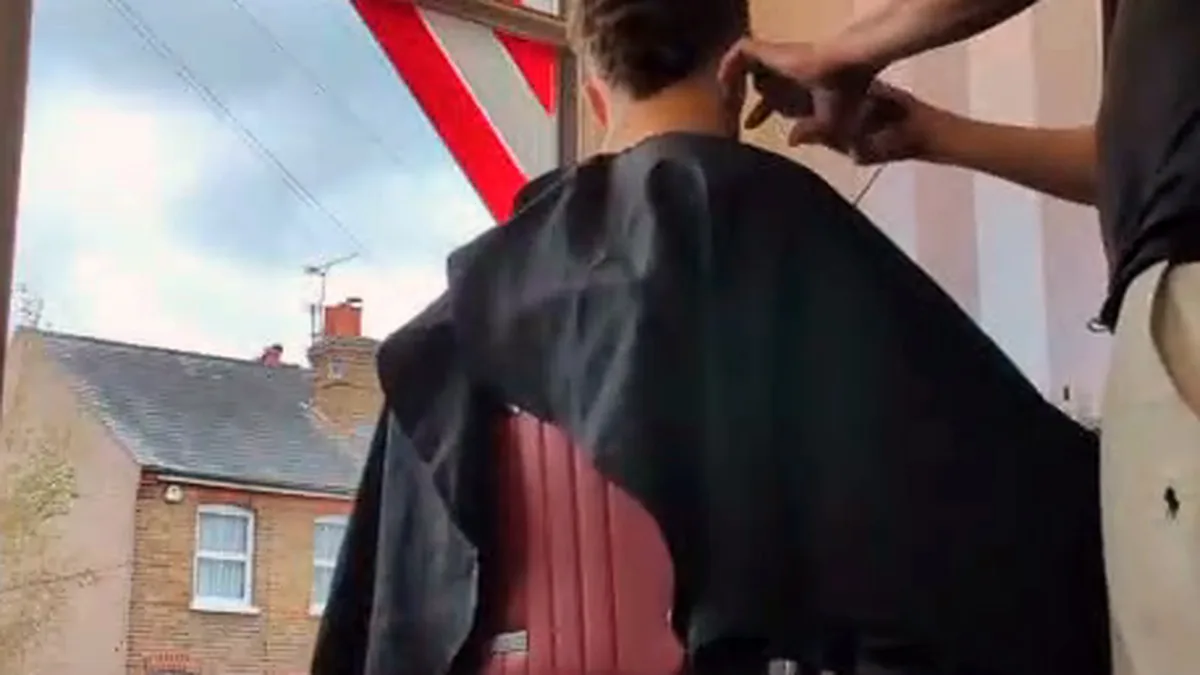
Short answer: A gents cut at The Billion Dollar Barbers is £20 and covers the consultation, the cut and the finish. Grant works it in scissors, clippers or both, depending on what your hair does rather than what was asked for. The decisions that matter are made before anything is picked up.
Most men book a haircut without ever being told what happens during one. This is the whole of a gents cut written out, so you can walk in knowing what to ask for and walk out knowing whether you got it.
In this guide
- What are you actually paying for?
- What is the consultation really asking?
- Scissors or clippers, and does it matter?
- Where should the weight sit?
- What does finishing the neckline mean?
- How do you describe what you want and get it?
- How long should a gents cut hold its shape?
- What if you want to change it completely?
What are you actually paying for?
Judgement, mostly. The cutting is the easy half.
A gents cut at The Billion Dollar Barbers is £20 and includes the consultation, the cut and the finish. Nothing on that list is an extra and there is no styling supplement at the end.
What the money buys that is harder to see is the set of decisions made before any tool comes off the shelf. How short the sides can go before your head shape stops carrying it. Whether your hair will hold the shape you have described or collapse out of it by Thursday. Where your hairline actually sits, as opposed to where it looks like it sits when your hair is dry and pushed forward. Those choices are made in the first two minutes and they determine everything that follows.
The other thing you are paying for is that Grant owns the shop and is the only barber in it, so the person making those judgements this month is the person who made them last month and will make them again next month. That is not a small detail. It is the difference between a haircut and a haircut that continues.
What is the consultation really asking?
Not what you want. How you live.
Every appointment starts with Grant talking through the cut, and the questions that matter are rarely about length. They are about mornings. Do you use product or not. Do you dry it or leave it wet and hope. How many minutes are you genuinely willing to spend on it, and be honest, because a cut built for ten minutes and a hairdryer is a bad cut if you are out of the door in three.
The second thing being worked out is what you actually did with the last one. Whether you liked how it grew out, whether you were pushing it around all week to make it behave, whether the bit that annoyed you was the top or the sides. Men usually know something was off and cannot name it. Naming it is half the job.
On a first visit this takes proper time, because there is no history. On a fifth it takes seconds, because the history is the point.
Scissors or clippers, and does it matter?
It matters, and the answer is usually both.
Clippers work to a set length. They are precise, fast and consistent, and they are what makes a graduated back and sides possible at all, because moving through the guards in order is how you build a blend that has no visible step in it.
Scissors remove weight without setting a fixed length. That is what they are for. Where hair needs to keep movement, sit differently in different places, or lose bulk without losing length, a clipper cannot do it and a scissor can.
Most gents cuts use clippers below and scissors above, and the interesting part is the boundary between them. That is where a cut is either invisible or obvious, and it is the part that separates a competent cut from a good one.
The one thing worth knowing is that a full scissor cut takes longer and suits hair with some length and some texture. If your sides are short, clippers are not a shortcut, they are the correct tool. Asking for a scissor cut because it sounds more skilled is a way of getting a worse haircut.
Where should the weight sit?
Wherever your head is not already doing the work.
This is the decision men most often leave to chance, and it dates a cut faster than length does. Weight is where the bulk of the hair sits once everything else has been taken down, and it is what gives a cut its shape from three metres away, which is the only distance anybody else ever sees you from.
A flatter crown wants weight kept on top. A prominent one wants it taken out or the whole thing sits like a helmet. A round face usually wants height rather than width, so weight goes up rather than out. Hair that grows forward will not hold weight pushed back no matter how much product goes into it, and hair that grows flat will not carry a crop that needs lift.
None of that is on a reference photo. A photo shows you somebody else's hair on somebody else's head, which is useful for the idea and misleading about the outcome. Bring one anyway, but expect the conversation to be about which parts of it your hair will actually do.
What does finishing the neckline mean?
Following your growth rather than drawing over it.
There are two ways to finish a neckline. One is to square it off with a straight edge, which looks immaculate in the shop and starts fighting your natural growth within a fortnight. Hair grows back where it was always going to grow, and a line that ignored it now has stubble outside it. That is why some cuts look untidy at the back long before they look untidy anywhere else.
The other is to taper it out, following the line your hair actually makes and softening rather than stopping. It looks slightly less dramatic on day one. It stays tidy for weeks.
The same applies around the ears, which is the other place a fast cut shows. The line should sit where the hair meets skin naturally, not a few millimetres above it to look cleaner, and it should match on both sides, which sounds obvious and is the most common thing to get wrong because you cannot check it yourself while sitting down.
Ask for it tapered unless you have a specific reason not to. It is the single easiest thing to get right and the one that buys you the most time.
How do you describe what you want and get it?
Describe the outcome, not the technique.
The words men reach for are the ones they have heard, and most of them mean several things. Asking for a fade tells a barber almost nothing, because a high skin fade and a low taper are both fades and they are not remotely the same haircut. Asking for it "short" is worse, since short covers everything from a number four to a shaved head.
Three sentences do more than any amount of terminology.
Say what you want it to look like in week three, not on the day. That single sentence tells Grant more than a photograph. It sets how much comes off, where the weight goes and whether a taper or a fade is right.
Say what you do with it in the morning. Product or nothing, dried or air dried, three minutes or ten.
Say what annoyed you about the last one. Too short at the temples, too heavy on top, would not sit down at the crown, whatever it was. Every good cut is partly a correction of the previous one.
And if you have no idea, say that too. It is a better starting point than a word you half mean, and a consultation with somebody who is going to be cutting your hair for years is the right place to work it out.
How long should a gents cut hold its shape?
Between two and eight weeks, and the range is the whole point.
A tight skin fade looks its sharpest for around a fortnight. After that the blend softens at the edges. That is not a fault, it is short hair growing, and no cut avoids it. If you want a fade to look the way it did on day one, you are on a two to three week cycle and you should plan for that rather than being disappointed by it.
A lower fade or a longer graduation keeps weight around the ear and the neck and still reads as intentional at week six. A classic scissor cut with length on top is the most forgiving of all and usually looks right for six to eight weeks, because it grows out into itself rather than out of shape.
One grade all over at £10 is the lowest maintenance option on the menu and holds for weeks, provided the neckline and ears are finished properly, which is why that gets done rather than skipped.
The useful question is not how short do you want it. It is how long do you want it to look right for. Answer that at the consultation and the cut gets built around your diary instead of around a look that only works on the day you walk out.
What if you want to change it completely?
Do it across two appointments, not one.
A full change is where having one barber matters most and where men most often get it wrong. Walking into an unfamiliar shop, asking for something dramatically different from a photograph, and finding out at the end that your hair does not do that is a bad afternoon with no way back and nobody to adjust it next time.
Going from long to short, or from a heavy classic cut to a fade, works far better in stages. The first appointment takes the length down and establishes the new shape without committing to the extremes. You live with it for a few weeks and find out how it behaves on your head, in your bathroom, with the effort you are actually going to put in. The second refines it, and by then Grant has seen how it grew out of the first stage, which is information no photograph can give either of you.
The other thing worth hearing out loud is that some changes will not suit you, and a barber who says so before picking anything up is doing you a favour. If a high skin fade is going to expose a hairline you would rather keep covered, that is better said at the start than discovered at the end.
Book it online, or call 07593 144080. If you are coming in from Pinner or anywhere else across HA5 and HA6, there is on-street parking directly outside the shop.
Coming from nearby?